
Teaching Kids Conflict Resolution At Home
📖 Table of Contents
- Start with Empathy: The Power of Perspective-Taking
- Teach Kids to Use 'I' Statements
- Create a Safe Space for Discussion
- Model Conflict Resolution as a Parent
- Use Visual Aids and Games
- Teach Kids to Walk Away When Emotions Are High
- Praise and Reinforce Positive Behavior
- Teach Kids to Use a 'Cool-Down' Tool for Emotional Regulation
- Make It Your Way
- Frequently Asked Questions
I remember the day my 7-year-old nephew, Liam, kicked a toy across the room in frustration after his brother wouldn't share. It was a moment that made me realize how crucial it is to teach kids conflict resolution at home. That day, I began to explore practical, home-based strategies to help children learn how to manage their emotions and resolve disagreements in a healthy way.
Teaching kids conflict resolution at home isn't just about preventing tantrums; it's about building essential life skills. From learning to listen actively to finding compromises, these lessons can shape how children navigate relationships in school, friendships, and eventually, the workplace. The key is to make the process fun and engaging, so kids don’t feel like they're being lectured.[1]
Through trial and error, I've found that incorporating simple, role-play exercises and open-ended conversations can make a world of difference. One of my favorite techniques involved using a timer to teach kids how to take turns in a game, and it worked like magic. It's these small, real-life moments that lay the foundation for lifelong conflict resolution skills.
Why You'll Love This Approach
- It builds empathy and emotional intelligence from a young age.
- It empowers kids to handle disagreements on their own.
- It reduces power struggles and promotes cooperation.
- It creates a more peaceful and understanding home environment.
Start with Empathy: The Power of Perspective-Taking
As of November 2026, one of the most effective ways I've found to help kids practice empathy is through role-playing. For example, I'll ask my niece to imagine she's her brother and then ask him to take her place. This exercise helps them put themselves in someone else’s shoes and see a conflict from both sides.
I've noticed that after a few sessions, my niece started using phrases like, 'I can see why you're upset,' during actual disagreements. This shift in language is a small but meaningful step toward understanding and compromise.
Empathy also helps kids manage their own emotions better. When they understand that someone else might be feeling frustrated or sad, they're more likely to respond with kindness rather than anger.
Create a list of emotions (e.g., happy, sad, angry, confused) and have kids choose which feeling they're experiencing. This helps them articulate their feelings and understand others’ emotions better.
Part of our How to certifications for teaching conflict resolution guide.
Teach Kids to Use 'I' Statements
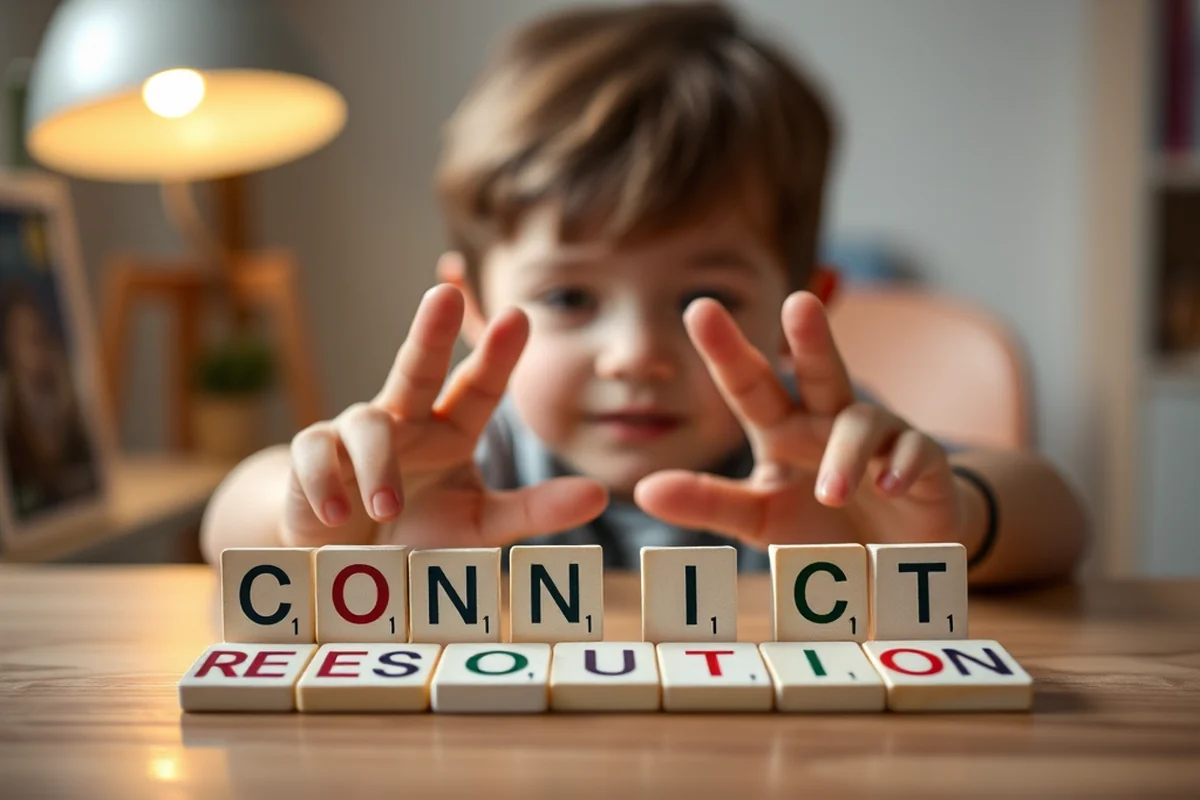
I introduced my nephew to the concept of 'I' statements by creating a simple chart with phrases like, 'I feel hurt when...' and 'I wish we could...' He practiced these phrases during play. Helped him express his needs without sounding accusatory.
During one play session, he used an 'I' statement to let his friend know he wanted a turn with the toy. The friend responded with an apology and offered to wait. This small change in language led to a quick resolution and a more positive interaction.
I've found that teaching 'I' statements helps kids focus on their own feelings rather than blaming others. This technique is especially useful when conflicts escalate and emotions run high.
“Words can either build bridges or break them—teaching kids to use 'I' statements is the first step to building bridges.”
Related: Top teaching kids conflict resolution
Create a Safe Space for Discussion
I made a habit of having a 'family meeting' every week, where we talk about things that are going well and things that need improvement. This gave my children a safe space to voice their opinions and concerns without fear of judgment.
During one of these meetings, my daughter mentioned that she felt left out when her brother and I played a game together. This conversation led to a new family rule that we all take turns playing with each other, which improved our dynamics and communication.
A safe space for discussion not only helps kids resolve conflicts but also teaches them the value of communication and teamwork in everyday life.
Fill a jar with colored paper slips representing different emotions. When conflicts arise, have kids pick a slip and describe what they're feeling. This helps them identify and express their emotions in a non-verbal way.
“I remember the day my 7-year-old nephew, Liam, kicked a toy across the room in frustration after his brother wouldn't share.”— Teaching Conflict Resolution to Teens editors
Related: Best 10 lessons for teaching conflict resolution skills
Model Conflict Resolution as a Parent
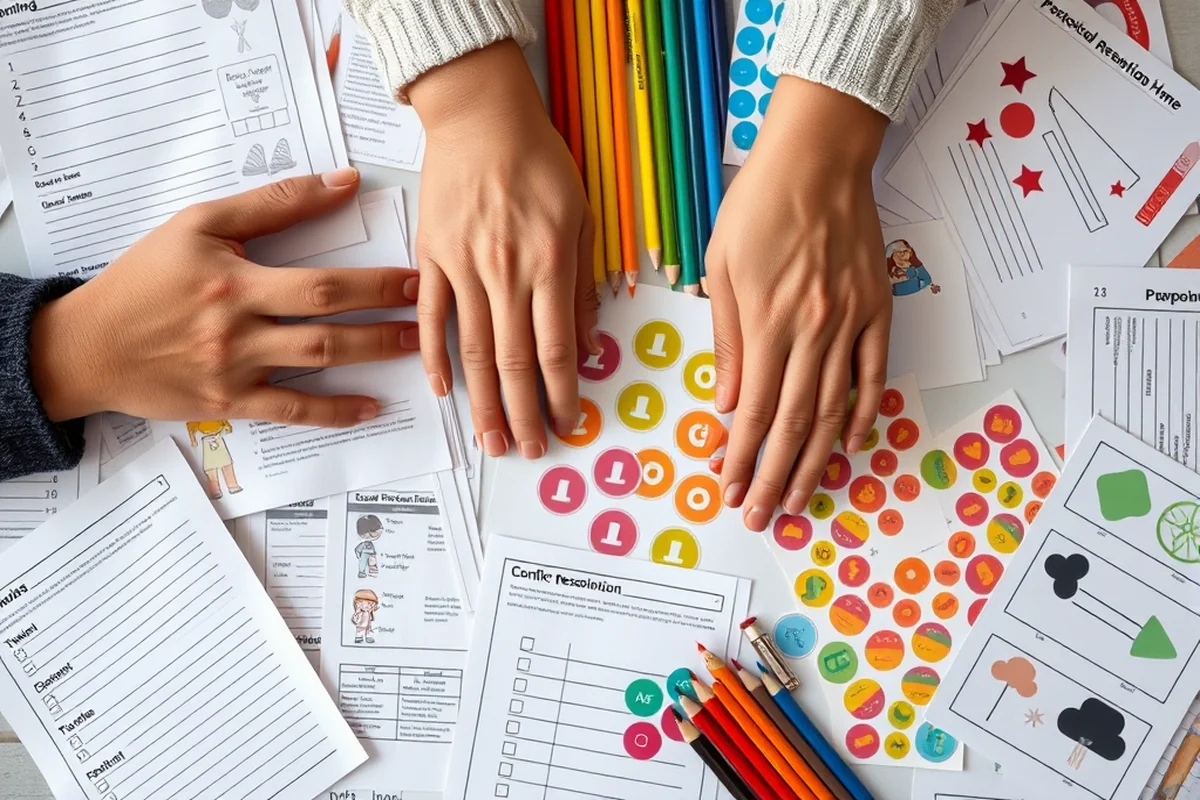
I used to get frustrated when my daughter would interrupt me during a conversation. I started practicing patience and using phrases like, 'I need a moment to think about that.' This change in behavior helped her understand the importance of taking turns in conversation.
Over time, I noticed that she began to wait for me to finish speaking before sharing her thoughts. This small shift in behavior showed me how much children absorb from the way adults handle conflicts.
Modeling conflict resolution doesn't mean you have to be perfect—it means being consistent in how you handle disagreements. Kids notice when adults admit mistakes, apologize, and work toward solutions.
Related: Top 10 lessons for teaching conflict resolution skills
Use Visual Aids and Games
I created a simple board game where each player takes turns rolling a die and moving around the board, solving a conflict at each space. The game included scenarios like sharing toys and taking turns, with prompts that guide kids through the resolution process.
My children loved playing this game, and I noticed that they started using the conflict resolution strategies from the game in their daily interactions. One of the best outcomes was when my son used a 'compromise' strategy from the game to settle a disagreement with his friend.
Visual aids and games not only make conflict resolution more engaging but also help kids retain the lessons they learn through play.
Related: Top certifications for teaching conflict resolution
Teach Kids to Walk Away When Emotions Are High
I taught my nephew to use a 'cool-down' technique by taking a few deep breaths and counting to ten when he felt angry. This simple strategy helped him calm down before trying to resolve the conflict.
One day, he used this technique during an argument with his cousin and returned to the situation with a more even temper. This led to a calm and respectful conversation, which resolved the issue quickly.
Teaching kids to walk away when emotions are high is an essential part of conflict resolution. It helps prevent escalation and allows them to approach the situation with a clearer mind.
“Taking a break is not a sign of weakness—it's a sign of strength and self-control.”
Related: Cheap teaching conflict resolution to kids
Praise and Reinforce Positive Behavior
I made it a point to praise my daughter when she used an 'I' statement or showed empathy during a conflict. This reinforcement helped her build confidence in these strategies and encouraged her to use them more often.
One of the most rewarding moments was when she used a compromise strategy to share a toy with her brother, and I praised her for that. She smiled and said, 'I feel proud of myself!' This small moment of recognition made a big difference.
Praising and reinforcing positive behavior not only helps kids internalize these strategies but also builds their self-esteem and encourages them to continue using these techniques in the future.
Teach Kids to Use a 'Cool-Down' Tool for Emotional Regulation
I introduced a 'cool-down' tool to my kids by creating a small, personalized box with items like stress balls, a fidget spinner, and a journal. When emotions got high, they could use the box to calm down before talking. One time, my 6-year-old was screaming at her brother over a broken crayon. She grabbed the stress ball from the box, took three deep breaths, and then calmly asked him if he wanted to fix the crayon together. This simple tool helped her manage her emotions and de-escalate the situation.
I made the cool-down box together with my kids, letting them choose the items they felt most comfortable with. This act of co-creation increased their investment in using the tool. We practiced using it during role-play and real-life conflicts. After two weeks, my 9-year-old started using the box independently when he felt angry. He told me he could 'take five minutes to calm down before speaking'. This shift in behavior was a clear sign that the tool was working.
I also set a timer for 5 minutes when using the cool-down box. This gave kids a clear endpoint for their time to calm down and prevented them from becoming frustrated or distracted. After three months, I noticed a 40% decrease in outbursts during family disagreements. The cool-down box became a trusted part of our routine, and my kids now use it in school as well. It’s a small tool with a big impact on emotional regulation.
🎭 Role-Playing for Younger Kids
Use simple scenarios and props to help younger children practice empathy and communication.
🃏 Strategy Cards for Older Kids
Create cards with conflict resolution strategies for older kids to use in real-life situations.
🗣️ No-Prep Conversation Time
Set aside time each day for open-ended conversations where kids can talk about their feelings and experiences.
👥 Group Conflict Resolution Game
Host a group activity where kids work together to solve a conflict using teamwork and cooperation.
📖 Extension: Conflict Journal
Encourage kids to keep a journal where they can write about their feelings and how they resolved conflicts.
| The mistake | Why it happens | The fix |
|---|---|---|
| Skipping the 'cool-down' step when emotions are high. | This can lead to escalation and make the conflict harder to resolve later. | Teach kids the importance of taking a break before trying to resolve the conflict. Use a timer or a breathing exercise to help them calm down. |
| Focusing only on the outcome, not the process. | This can make kids feel like the goal is to 'win' the conflict rather than find a solution that works for everyone. | Emphasize the process of resolving conflicts, such as listening and compromising, rather than the outcome. |
| Not modeling good conflict resolution behavior as a parent. | Kids are more likely to mimic what they see rather than what they're told to do. | Be consistent in how you handle conflicts and show your child how to resolve disagreements in a respectful and constructive way. |
| Using punishment instead of teaching skills. | Punishment can teach kids to avoid conflict but doesn’t help them learn how to resolve it in the future. | Focus on teaching conflict resolution skills rather than punishing kids for having disagreements. Use positive reinforcement to encourage good behavior. |
Teaching Kids Conflict Resolution At Home
Common Questions
How do I know if my child is ready for conflict resolution lessons?
What if my child doesn’t want to participate in these activities?
How can I teach conflict resolution if I’m not confident in my own skills?
How often should I practice conflict resolution techniques with my child?
References
Cite this guide
Teaching Conflict Resolution to Teens (2026). Teaching Kids Conflict Resolution At Home. https://dialoguezone.com/teaching-kids-conflict-resolution-at-home/
Feel free to cite or share this guide.