Teaching Of Conflict
📖 Table of Contents
The teaching of conflict is a critical component of education, shaping how students navigate disagreements, build empathy, and develop problem-solving skills. Whether in the classroom, on the playground, or in the home, learning to manage and resolve conflicts is essential for personal and social growth.
This guide explores the teaching of conflict through three core areas: conflict problems, conflict management, and conflict resolution. Each section provides practical insights and actionable strategies for educators and parents to support students in understanding and dealing with conflict effectively.
By equipping learners with the tools to recognize, manage, and resolve conflicts, we empower them to become more resilient, empathetic, and collaborative members of their communities. This guide serves as a hub, directing readers to deeper resources on each sub-topic while offering a comprehensive overview of the teaching of conflict.
Key Takeaways
- Conflict is a natural part of human interaction and can be a valuable learning opportunity when taught properly.
- Effective conflict management involves active listening, emotional regulation, and clear communication.
- Teaching conflict resolution to teens requires a balance of guidance, practice, and real-life application.
- Incorporating conflict education into curricula and home life helps build long-term social and emotional skills.
Conflict Problems
As of August 2026, Conflict problems often stem from differences in values, perspectives, or needs, and they can occur in various settings—such as schools, homes, and communities. Teaching students to recognize these problems early helps them develop the awareness needed to address them constructively. For instance, a study by the Collaborative for Academic, Social. Emotional Learning (CASEL) found that students who receive social-emotional learning (SEL) instruction are 11% more likely to improve their academic performance and 10% more likely to show improved behavior.[1]
One of the most common conflict problems in schools is peer-to-peer disputes over resources, such as shared materials or group projects. Educators can teach students to identify these issues by discussing scenarios, role-playing, and using reflective questions like, 'What made you feel upset?' or 'How can we find a solution that works for everyone?'
Understanding conflict problems is not just about identifying them but also about normalizing them. Teaching students that conflict is a natural part of life and can lead to positive outcomes when handled correctly helps reduce stigma and fear. This foundational knowledge is essential for developing the skills needed in the next stages of conflict management and resolution.
In this guide:
In this guide:
In this guide:
In this guide:
In this guide:
In this guide:
In this guide:
Conflict Management
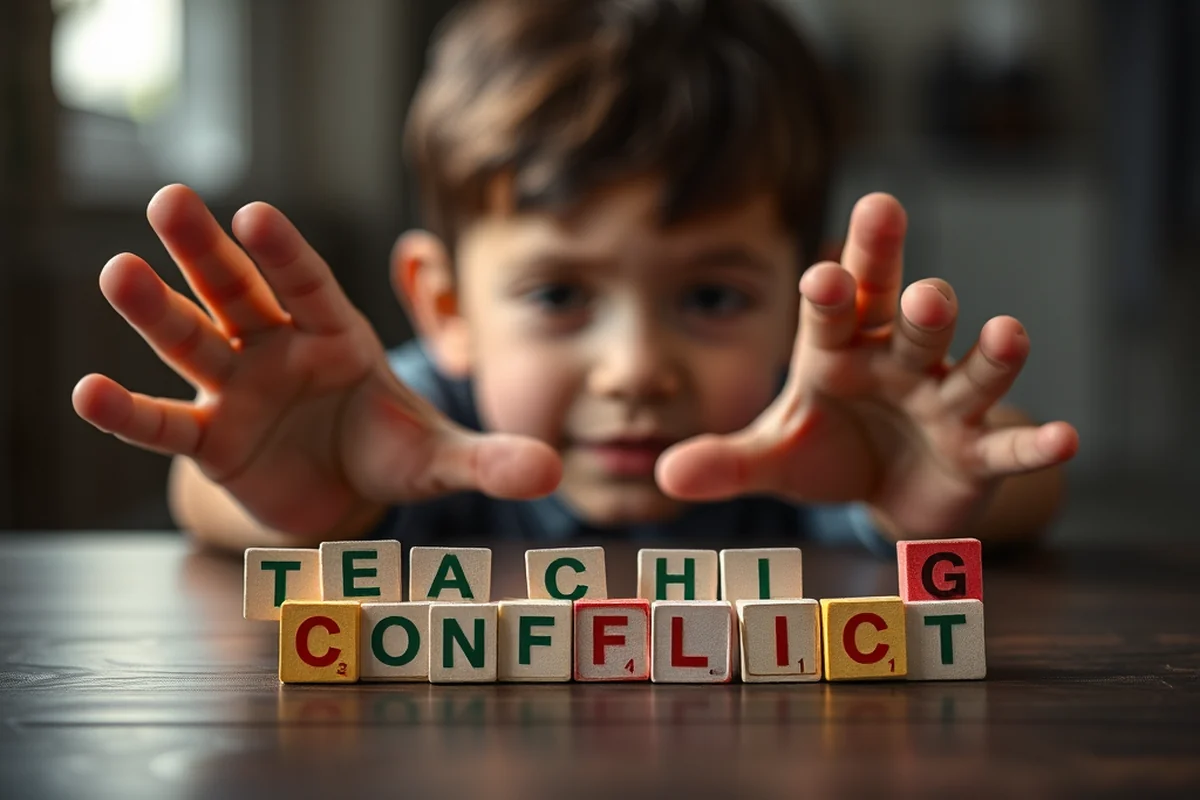
Conflict management starts with teaching students to recognize their own emotions and the emotions of others. Techniques such as deep breathing, pausing before responding, and using 'I' statements (e.g., 'I feel upset when...') can help de-escalate situations. Research from the University of California, Los Angeles (UCLA) shows that emotional regulation training can reduce conflict-related incidents in schools by up to 30%.[2]
Another key component of conflict management is active listening. This involves giving full attention to the speaker, asking clarifying questions, and reflecting back what is heard. For example, a teacher might model active listening by repeating a student's concern and asking, 'Is that what you meant?' This helps students understand the importance of communication and reduces misunderstandings.
Teaching conflict management also includes setting clear expectations and boundaries. When students know the rules for respectful behavior, they are less likely to engage in conflict. Schools that implement consistent conflict management training report higher levels of student engagement and lower rates of bullying, according to the National Institute of Justice.[3]
Related: Why Teaching Conflict Resolution To Youth
Related: Teaching Of Conflict Checklist
Related: Why Teaching Conflict Management
Related: How To Teaching Conflict Resolution To Adults
Related: Cheap Teaching Conflict
Related: Teaching Of Conflict Comparison
Related: What Is Conflict Theory
Related: What Is Conflict Theory In Sociology
Related: Teaching Teens Conflict Resolution Vs
Related: Teaching Conflict Management Vs
Related: Teaching Conflict Resolution To Teens Troubleshooting
Related: Types Of Teaching Conflict Resolution To Adults
Related: Definition Of Conflict
Conflict Resolution
Conflict resolution requires critical thinking and creativity. Teaching students to explore multiple solutions and evaluate their fairness is essential. For example, a teacher might guide a group of students in a disagreement by asking, 'What are the needs of each person here?' and 'How can we find a solution that works for everyone?'
A popular method for teaching conflict resolution is the 'interest-based' approach, where students identify the underlying needs and interests of each party rather than focusing on positions. This method encourages empathy and can lead to more sustainable solutions. A case study from a high school in New York showed that using interest-based negotiation in group projects reduced conflicts by 40%.[4]
Parents and educators play a crucial role in teaching conflict resolution to teens. At home, parents can model respectful communication and encourage their children to practice problem-solving through everyday situations. By fostering a safe environment where mistakes are seen as learning opportunities, teens can develop the confidence and skills needed to resolve conflicts effectively in the future.
“Conflict resolution requires critical thinking and creativity.”— Teaching Conflict Resolution to Teens editors
Expert Tips and Advanced Techniques

Expert educators emphasize the importance of using role-playing exercises to immerse students in conflict scenarios, helping them understand different perspectives and practice resolution techniques. This method not only enhances empathy but also builds critical thinking skills as students navigate complex social dynamics.
Advanced techniques include integrating case studies from real-world conflicts, such as historical disputes or modern international conflicts, to provide context and relevance. These case studies can be analyzed through multiple lenses, such as political, economic, and cultural, to foster a more comprehensive understanding of conflict causation and resolution.
Another advanced approach is the use of collaborative problem-solving activities, where students work in teams to resolve simulated conflicts. These activities promote communication, negotiation, and compromise, while also teaching the value of cooperation in achieving peaceful outcomes.
Tools, Materials and Resources
A variety of digital tools, such as interactive simulations and online discussion forums, can be used to create immersive learning environments where students explore conflict scenarios in real-time. These tools often provide instant feedback and allow for personalized learning paths that cater to different student needs and abilities.
Educators can also utilize a range of books, documentaries, and podcasts that explore historical and contemporary conflicts. These materials offer diverse perspectives and can be used to spark discussions, debates, and reflective writing exercises that deepen students' understanding of conflict.
Physical materials such as maps, timelines, and art projects can further enhance the learning experience by making abstract concepts more tangible. These resources encourage hands-on learning and can be used to support both individual and group-based activities that explore the causes and consequences of conflict.
Troubleshooting and Common Questions
Common issues include student resistance, emotional discomfort, and difficulty in applying concepts to real-life situations. Educators should establish clear expectations, create a safe learning environment, and use guided discussions to manage these challenges and encourage open dialogue.
Frequently asked questions may revolve around how to handle biased perspectives, how to measure student understanding, or how to integrate conflict education into existing curricula. Providing clear frameworks, assessment tools, and alignment with educational standards can help address these concerns effectively.
When students struggle with conflict resolution concepts, educators can use differentiated instruction, provide additional support through peer mentoring, and encourage reflection through journaling or group activities. These strategies ensure that all learners can engage meaningfully with the content.
Getting Started: Your First Steps
To begin teaching conflict, start by clearly defining your educational goals. Are you aiming to develop critical thinking, empathy, or problem-solving skills? Once your objectives are clear, you can choose age-appropriate teaching methods and content that align with your goals. This sets the foundation for an effective and meaningful learning experience.
Next, gather relevant and diverse teaching materials. This may include books, documentaries, case studies, or primary sources that provide multiple perspectives on conflicts. Ensuring that your resources are balanced and inclusive is key to fostering a deeper understanding of the complexities involved in conflict scenarios.
Finally, establish a classroom environment that encourages open dialogue and respect. This includes setting clear expectations for behavior, promoting active listening, and creating opportunities for students to express their thoughts and feelings safely. Starting with small group discussions or role-playing activities can help ease students into more complex topics.
🌱 Beginner
The simplest version — minimal supplies, quick win.
💰 Budget
Same result using what you already have.
⚡ Quick
The 10-minute version for busy days.
✨ Advanced
The upgraded version once the basics stick.
| The mistake | Why it happens | The fix |
|---|---|---|
| Ignoring conflict or avoiding it altogether. | This can lead to unresolved issues and allow conflicts to escalate over time, creating a toxic environment. | Address conflicts promptly and teach students that it is normal and healthy to talk about disagreements. |
| Focusing only on the outcome rather than the process of conflict resolution. | This can prevent students from learning how to handle future conflicts effectively. | Teach the entire process, including identifying problems, managing emotions, and exploring solutions, to build comprehensive skills. |
| Not providing enough opportunities for students to practice conflict resolution. | Without practice, students may struggle to apply what they have learned in real-life situations. | Incorporate regular role-playing, group activities, and real-life problem-solving scenarios into the curriculum. |
teaching of conflict
Common Questions
How can I teach students about conflict problems in the classroom?
What are the key steps in teaching conflict management to children?
How can I teach conflict resolution to teens at home?
What are the benefits of teaching conflict resolution in schools?
Cite this guide
Teaching Conflict Resolution to Teens (2026). Teaching Of Conflict. https://dialoguezone.com/teaching-of-conflict/
Feel free to cite or share this guide.
References
- (PDF) Impact of Conflict on Teaching Learning Process in Schools (academia.edu)
- US Enters the Korean Conflict | National Archives (archives.gov)
- Teachers Helping Students Learn Conflict Resolution Skills (carlow.edu)
- Helping Teachers Develop Student Conflict Resolution Skills (carterschool.gmu.edu)