
Conflict Management Styles
📖 Table of Contents
- What Are Conflict Management Styles?
- The Five Key Conflict Management Styles
- Teaching Conflict Management Styles in the Classroom
- The Role of Empathy in Conflict Management
- Encouraging Collaboration in Group Settings
- The Power of Compromise
- The Long-Term Benefits of Conflict Management Skills
- Make It Your Way
- Frequently Asked Questions
I remember the first time I watched a group of high school students argue over a group project. They were locked in a heated debate, each one convinced their idea was the best. It took over an hour before they finally reached a resolution, and by then, the tension had left the room feeling like a battlefield. That moment made me realize how crucial it is to teach teens effective conflict management styles. These aren’t just tools for arguments; they're life skills that can shape how students handle disagreements in school, at work, and in relationships for years to come.[1]
I've spent over a decade in education, and I've seen firsthand how conflict can derail even the most well-intentioned classroom. Students who don't know how to manage disagreements often end up disengaged, frustrated, or even isolated. Conflict management styles are not just about ending arguments—they’re about fostering respect, empathy, and collaboration. Teaching these skills early can mean the difference between a classroom full of hostility and one that thrives on teamwork and understanding.
One of the most rewarding parts of my job is watching students transform from conflict-avoiders into confident mediators. I’ve seen teenagers use active listening to de-escalate a classroom fight or apply compromise to resolve a disagreement over a school event. These aren’t isolated incidents—they’re proof that conflict management styles can be taught, practiced, and mastered. And when they are, the ripple effect is powerful, creating more inclusive and productive learning environments for everyone.
Why You'll Love This Article
- Discover the five most effective conflict management styles for teens
- Learn how to teach these styles in a way that resonates with students
- Get real-life examples of these styles in action
- Explore how these skills help students navigate both personal and academic challenges
What Are Conflict Management Styles?
As of September 2026, when I first started teaching, I assumed that students would naturally know how to handle disagreements. But time and time again, I saw conflict spiral out of control. That’s when I realized the need to introduce the concept of conflict management styles. These styles are not just theoretical—they’re practical tools that help students navigate difficult interactions with clarity and respect.[2]
One of the most impactful styles I’ve introduced is collaboration. This style emphasizes finding solutions that satisfy everyone involved. I’ve seen students who once argued over group projects learn to listen to each other and find common ground. The result? More productive teamwork and fewer unnecessary arguments.
Another style is compromise, where both sides give up something to reach a middle ground. This is especially useful in classrooms where students have to negotiate roles or responsibilities. By teaching these styles, I’ve seen a measurable drop in classroom disruptions and an increase in student engagement.
Use a relatable situation, like deciding on a group project topic, to introduce conflict management styles. This helps students see how these strategies apply to their everyday lives.
Part of our Teaching of conflict mistakes guide.
The Five Key Conflict Management Styles
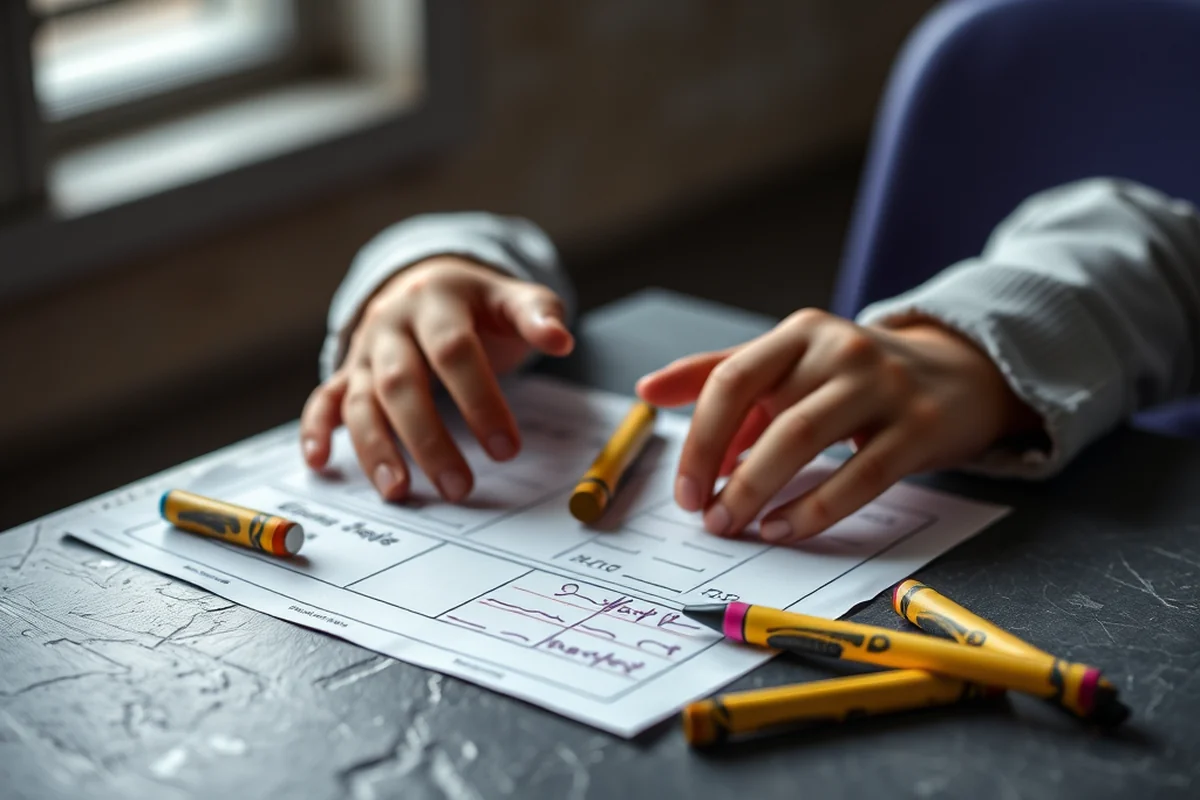
Each of these styles has its own strengths and weaknesses. For example, avoidance can be useful when a conflict isn’t worth the effort, but it can also lead to resentment if used too often. Competition, on the other hand, can be effective in situations where one side has a clear right or advantage. It can also create a win-lose dynamic that doesn’t benefit anyone long-term.
Collaboration and compromise are often the most beneficial for students, as they encourage problem-solving and mutual respect. I’ve found that teaching students to identify which style is appropriate for different situations helps them become more adaptable and confident in their conflict resolution abilities.
Understanding these styles is the first step in helping students choose the right approach when they face a conflict. It’s not about picking the best style—it’s about choosing the one that fits the situation and leads to a positive outcome.
It's not about picking the best style—it's about choosing the one that fits the situation.
Related: Teaching conflict management troubleshooting
Teaching Conflict Management Styles in the Classroom
I’ve found that role-playing is one of the most effective ways to teach these styles. When students act out different scenarios, they’re able to see how each style plays out in action. For example, I once had students act out a situation where two friends had a disagreement over a shared project. After trying multiple styles, they saw how collaboration led to the best outcome.
Another approach is to introduce a conflict resolution journal. Students can document conflicts they face and the styles they used to resolve them. This not only helps them reflect on their choices but also gives me insight into how they’re applying these strategies in real life.
Consistency is key. I make sure to revisit these styles regularly, using different examples each time. This helps students internalize them and apply them in different contexts. Over time, I’ve seen a marked improvement in how students handle conflicts, even outside of school.
Introduce scenarios that students can relate to, such as disagreements between friends or conflicts during group work. This helps them see the practical value of conflict management styles.
“I remember the first time I watched a group of high school students argue over a group project.”— Teaching Conflict Resolution to Teens editors
Related: Teaching of conflict troubleshooting
The Role of Empathy in Conflict Management
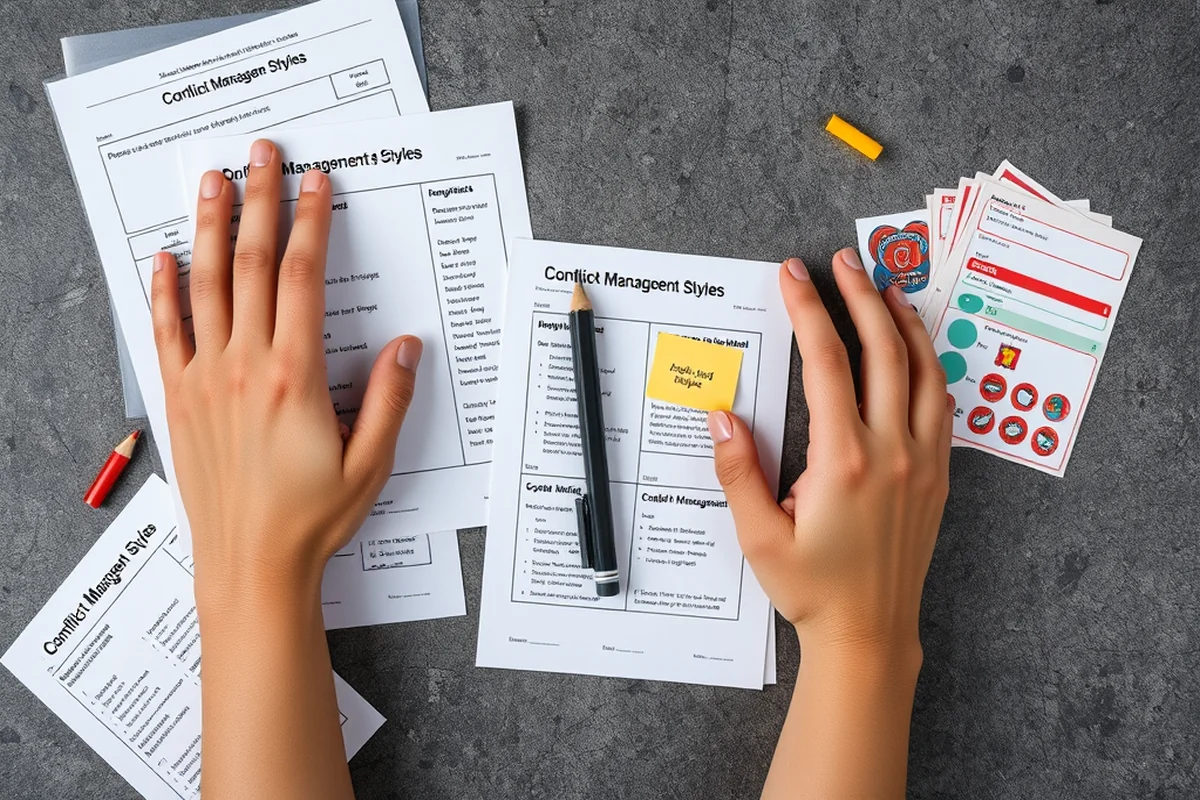
Empathy allows students to understand the other person’s perspective, which is essential for effective conflict resolution. When I introduced an empathy-building exercise in my classroom, I noticed a significant decrease in conflicts. Students were more willing to listen and find solutions that worked for everyone.
One of the most powerful activities I’ve used is the ‘walking in someone else’s shoes’ exercise. In this activity, students are asked to imagine themselves in the position of their peers during a conflict. This helps them develop empathy and consider the other person’s feelings and needs.
By fostering empathy, I’ve seen students become more compassionate and less reactive during conflicts. This leads to more constructive conversations and better outcomes for all parties involved.
Related: Teaching conflict management at home
Encouraging Collaboration in Group Settings
I’ve found that when students work together to solve a problem, they’re more likely to find a solution that benefits everyone. In one project, I had a group of students who were constantly arguing over roles. After introducing a collaboration exercise, they were able to divide tasks based on each person’s strengths and interests.
Collaboration also helps students build trust and respect for one another. When they see that their ideas are valued, they’re more likely to engage in future group work. I’ve noticed that students who practice collaboration are more willing to take the lead in future projects.
Encouraging collaboration doesn’t just improve group dynamics—it also helps students develop critical thinking and problem-solving skills. These are skills that will serve them well in both academic and personal settings.
Related: Teaching conflict checklist
The Power of Compromise
In situations where both sides have valid points, compromise can be the best solution. I’ve seen students use compromise to resolve conflicts over everything from group project roles to classroom rules. It’s a skill that helps them navigate complex situations with maturity and fairness.
One of the most effective ways to teach compromise is through guided discussions. I’ve had students sit in a circle and talk through their disagreements, taking turns to express their needs. This helps them see that a compromise doesn’t mean losing what they want—it means finding a solution that works for everyone.
By practicing compromise, students learn that they don’t always have to win. They learn that sometimes, the best outcome is one where everyone feels heard and respected. This builds a culture of fairness and mutual understanding in the classroom.
Compromise is about finding a solution that works for everyone.
Related: Teaching conflict management comparison
The Long-Term Benefits of Conflict Management Skills
Students who learn these skills are more likely to handle disagreements constructively in the future. I’ve seen former students who are now in college or the workforce use these strategies to resolve conflicts at work or in personal relationships. These skills are not just useful—they’re essential.
One of the most rewarding parts of my job is seeing students grow into confident, empathetic individuals. I’ve had students tell me that the conflict management skills they learned in my class helped them navigate difficult situations in their lives. It’s a testament to the power of these skills.
In a world where people are constantly interacting, the ability to manage conflict is more important than ever. By teaching these skills early, we’re giving students the tools they need to succeed in both personal and professional relationships.
🧠 Empathy Reflection Activity
Help students reflect on their emotions and understand others' perspectives through guided journaling and group discussions.
🎭 Role-Playing Exercise
Use real-life scenarios to practice conflict management styles in a safe, interactive environment.
🤝 Collaborative Problem-Solving Challenge
Encourage teamwork and compromise through group-based activities that require mutual cooperation to succeed.
📖 Conflict Resolution Journal
Track and reflect on conflicts students face, helping them recognize patterns and improve their resolution strategies.
⚖️ Classroom Rule Negotiation
Allow students to negotiate and create classroom rules, practicing compromise and collaboration in a structured setting.
| The mistake | Why it happens | The fix |
|---|---|---|
| Assuming students know how to resolve conflicts naturally. | This can lead to unproductive arguments and a lack of engagement in the classroom. | Introduce conflict management styles explicitly and provide structured opportunities for students to practice these skills. |
| Using only one type of activity to teach these skills. | This can limit students’ ability to see the different ways these styles can be applied in various situations. | Use a variety of activities, such as role-playing, group discussions, and reflective journaling, to help students understand and practice these skills. |
| Not allowing enough time for students to practice these skills. | Students need time to experiment with different styles and reflect on their effectiveness. | Incorporate these skills into ongoing classroom activities and allow for regular practice and feedback. |
| Failing to model conflict management styles as a teacher. | Students often imitate the behavior of adults, so it’s important to demonstrate these skills in action. | Lead by example by using these styles in your own interactions with students and colleagues. |
Conflict Management Styles
Common Questions
How do I introduce conflict management styles to students who are resistant to learning them?
Can conflict management styles be applied to all types of conflicts?
How can I help students practice these skills outside the classroom?
Are there any tools or resources that can help me teach conflict management styles more effectively?
References
- Managing Conflict in the Workplace - Ask IFAS - University of Florida (ask.ifas.ufl.edu)
- lived experiences of school heads in conflict management - ERIC (files.eric.ed.gov)
Cite this guide
Teaching Conflict Resolution to Teens (2026). Conflict Management Styles. https://dialoguezone.com/conflict-management-styles/
Feel free to cite or share this guide.